

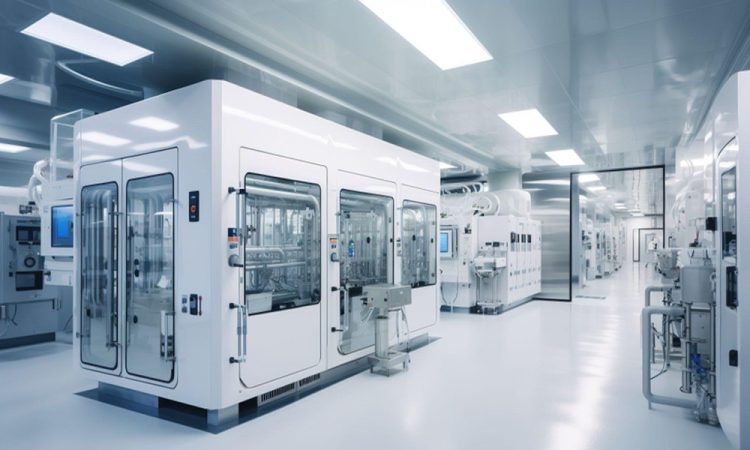
A medical device cleanroom provides the controlled environment that separates safe, regulatory-compliant production from manufacturing that exposes patients to contamination risk. Airborne particles, microorganisms, and chemical vapours compromise the sterility and dimensional integrity of devices ranging from implantable cardiac leads to single-use surgical instruments. Purpose-built cleanroom facilities address these hazards through engineering controls that manage air quality, temperature, humidity, and personnel behaviour.
Engineering Principles Behind Cleanroom Design
Cleanroom design begins with airflow architecture. Unidirectional (laminar) airflow systems push filtered air from ceiling-mounted HEPA units downward through the workspace and out through low-level return vents. This pattern prevents contaminated air from recirculating across product surfaces. Turbulent (non-unidirectional) systems suit less critical applications where Class 7 or Class 8 conditions suffice.
Room pressurisation maintains a positive differential between the cleanroom and adjacent uncontrolled areas. This pressure cascade, typically 10 to 15 pascals between zones, prevents contaminated air from migrating inward when doors open. Airlocks between zones buffer the pressure transitions and provide gowning areas for personnel.
HVAC and Filtration Systems
HEPA filters rated at 99.97% efficiency for 0.3-micron particles form the primary contamination barrier. Critical applications use ULPA filters rated at 99.9995% for 0.12-micron particles. Filter integrity testing per ISO 14644-3 confirms that installed filters perform to specification.
Air change rates vary by classification. An ISO Class 5 space requires 240 to 600 air changes per hour. ISO Class 7 spaces operate at 60 to 90 air changes per hour. These rates determine fan capacity, ductwork sizing, and energy consumption, which can represent 40% of a cleanroom facility’s operating cost.
Construction Materials and Surfaces
Every surface inside a medical device cleanroom must resist particle shedding, chemical degradation, and microbial colonisation. Walls use flush-mounted, powder-coated steel panels with sealed joints. Ceilings incorporate walk-on systems that support HEPA modules and lighting without penetrating the room envelope.
Flooring uses seamless, coved epoxy or vinyl sheet systems that eliminate joints where contaminants accumulate. Light fittings mount flush with the ceiling to prevent ledges that collect particles. Every penetration for electrical conduits, piping, or gas lines receives sealed boot assemblies.
Classification Standards and Monitoring
ISO 14644-1 defines cleanroom classifications from ISO Class 1 (the most stringent) to ISO Class 9. Medical device production typically operates within ISO Class 5 through ISO Class 8, depending on the device risk classification and whether the product contacts sterile tissue.
Classification testing involves counting airborne particles at defined sampling locations using optical particle counters. The number of sampling points depends on room area, with larger rooms requiring more measurement locations to confirm uniform air quality.
- Continuous particle monitoring at critical process points provides real-time contamination data
- Settle plate and active air sampling methods quantify viable (microbial) contamination levels
- Temperature and humidity sensors log environmental conditions that affect both product quality and personnel comfort
“The integration of real-time environmental monitoring with production execution systems has transformed how Singapore’s medical device manufacturers maintain cleanroom compliance and respond to deviations,” said Dr. Wong Yew Hoong, Senior Research Fellow at the Singapore Institute of Manufacturing Technology.
Operational Protocols That Maintain Classification
Achieving cleanroom classification during commissioning represents the starting point. Maintaining that classification during production operations requires disciplined protocols enforced through training, monitoring, and audit programmes.
Personnel gowning procedures specify the sequence and method for donning cleanroom garments. Full coverage gowning for ISO Class 5 environments includes sterile coveralls, hoods, face masks, goggles, double gloves, and dedicated footwear. Each gowning session follows a defined sequence that prevents outer garment surfaces from contacting skin or hair.
Material transfer into the cleanroom for medical devices follows validated cleaning and decontamination procedures. Components and raw materials pass through airlocks or pass-through chambers. Packaging materials are removed in stages, with outer wrapping discarded in the anteroom and inner packaging opened only within the classified space.
Qualification and Validation Requirements
Cleanroom qualification follows a three-stage protocol. Installation qualification verifies that construction meets design specifications. Operational qualification confirms that HVAC systems, filtration, and monitoring equipment perform within defined parameters under operational conditions. Performance qualification demonstrates consistent environmental control during actual production activities.
Requalification occurs at defined intervals, typically annually, or whenever modifications to the room structure, HVAC system, or production equipment could affect environmental conditions. Regulatory auditors from the FDA, Health Sciences Authority, and notified bodies review qualification records as standard elements of facility inspections.
Cleaning and Decontamination Schedules
Cleanroom sanitation programmes define cleaning frequencies, approved agents, and validated methods for every surface. Daily cleaning addresses floors, work surfaces, and equipment exteriors. Weekly cleaning covers walls, ceilings, and fixed equipment. Monthly or quarterly deep cleaning includes areas behind equipment and above ceiling panels.
Cleaning agents rotate to prevent microbial resistance. Sporicides supplement routine disinfectants at prescribed intervals. Environmental monitoring data after cleaning confirms that microbial counts return to acceptable levels before production resumes.
Investing in Cleanroom Infrastructure
Building or upgrading a medical device cleanroom requires capital investment that ranges from SGD 3,000 to SGD 12,000 per square metre depending on classification level and complexity. Operating costs add 30 to 50% above standard manufacturing overhead due to energy, consumables, and monitoring. These investments protect product integrity, accelerate regulatory approvals, and reduce contamination-related rejections. Manufacturers committed to patient safety recognise that a well-designed medical device cleanroom forms the operational backbone of compliant, high-quality production.