

A forward contract and a futures contract are both agreements to buy or sell an asset at a predetermined price on a future date—but they differ significantly in how they’re structured, traded, and settled. The difference between forward and future contract lies in standardization: futures are standardized and traded on public exchanges (like the CME), while forwards are highly customized, private agreements traded over-the-counter (OTC).
Side-by-Side Comparison
| Feature | Forward Contract | Futures Contract |
|---|---|---|
| Trading venue | Over-the-counter (OTC) – private | Exchange-traded (CME, NYMEX, ICE) |
| Standardization | Fully customizable | Standardized terms |
| Counterparty | Direct between two parties | Exchange clearinghouse acts as counterparty |
| Counterparty risk | High – depends on other party’s creditworthiness | Low – clearinghouse guarantees contract |
| Settlement | Usually at maturity (end of contract) | Daily mark-to-market; gains/losses settled daily |
| Regulation | Minimal | Heavily regulated |
| Liquidity | Low – hard to exit before maturity | High – can exit any time during trading hours |
| Margin required | Usually not (collateral varies) | Yes – initial and maintenance margin required |
| Common users | Banks, corporations, large institutions | Traders, speculators, hedgers |
| Contract size | Negotiable | Fixed by exchange |
| Expiry | Any agreed date | Fixed expiry dates |
How Each Contract Works in Practice
Forward Contract Example
A US company expects to receive €5 million in 90 days from a European customer. They’re worried the euro will weaken against the dollar before then.
They enter a forward contract with their bank: agreed exchange rate of $1.10/€, settling in 90 days regardless of where the exchange rate actually moves.
In 90 days, they receive their euros and convert at $1.10 no matter what the market rate is. Risk is eliminated. No exchange involved – it’s a private agreement.
Futures Contract Example
A wheat farmer wants to lock in a price for the 10,000 bushels they’ll harvest in 6 months. They sell wheat futures contracts on the Chicago Mercantile Exchange at $5.50/bushel.
If wheat prices fall to $5.00 at harvest, the futures position has generated a profit that offsets the lower cash price received. The futures contracts are marked to market daily – gains and losses are settled each day through the exchange’s clearinghouse.
Daily Mark-to-Market: The Biggest Practical Difference
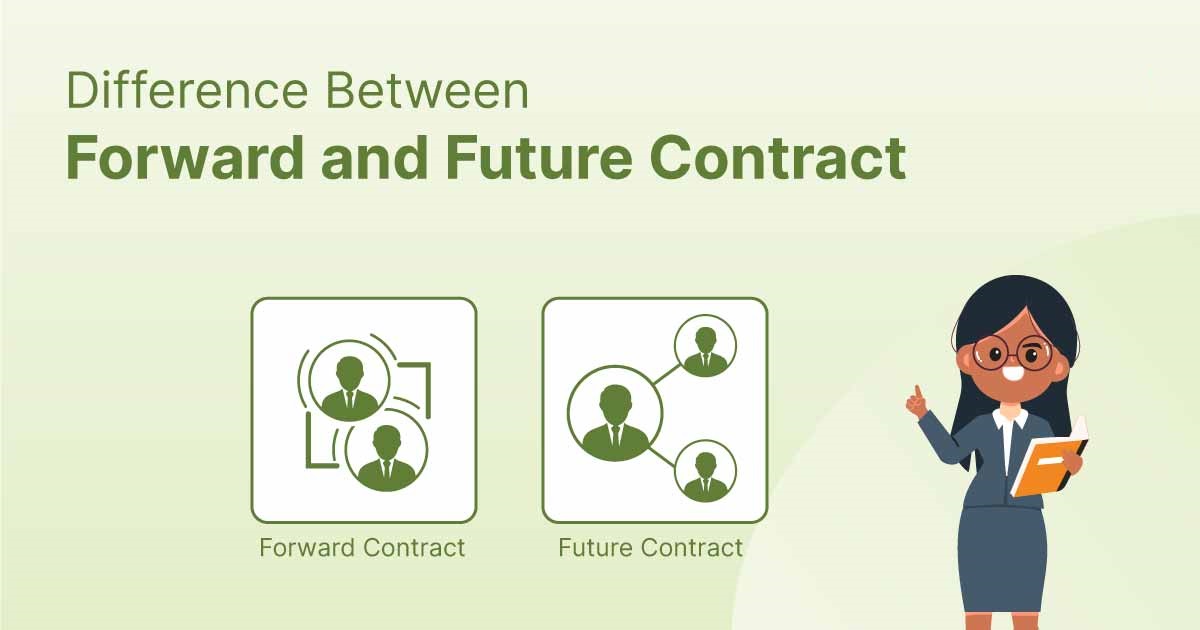
Futures contracts are marked to market daily – the exchange calculates gains and losses every day and credits/debits trader accounts accordingly.
If prices move against your futures position significantly, you may receive a margin call – a requirement to deposit additional funds to maintain the position. Fail to meet the margin call and the exchange closes your position automatically.
Forwards have no daily settlement – profit or loss is only realized at contract maturity.
Counterparty Risk: Why It Matters
| Contract | Counterparty Risk | Why |
|---|---|---|
| Forward | High | If the other party defaults, you may not receive what was promised |
| Futures | Very low | The exchange clearinghouse guarantees performance; uses margin as collateral |
The 2008 financial crisis exposed significant counterparty risk in OTC derivatives (including some forward-like contracts). Dodd-Frank legislation subsequently required more OTC derivatives to be cleared through centralized clearinghouses.
Who Uses Each and Why
| User | Preferred Instrument | Reason |
|---|---|---|
| Multinational corporations (FX hedging) | Forwards | Custom amounts, specific dates |
| Commodity producers (farmers, miners) | Futures | Liquid markets, exchange guarantee |
| Banks (interest rate risk) | Both | Forwards for custom, futures for liquid hedging |
| Traders/speculators | Futures | Easy to enter/exit; regulated markets |
| Large institutional investors | Both | Depends on exposure type and size |
The Bottom Line
The difference between a forward and futures contract comes down to customization vs. standardization, and private vs. exchange-traded. Forwards offer flexibility for specific hedging needs; futures offer liquidity, transparency, and counterparty safety through the exchange. Both serve critical roles in modern financial risk management.