
The Scale of the Problem That Businesses Generate
Plastic recycling Singapore industrial operators must engage with is not the casual act of dropping a bottle into a blue bin. Commercial and industrial operations generate plastic waste in categories and volumes that residential recycling infrastructure was never designed to handle: shrink wrap by the pallet, chemical drums by the hundred, injection-moulded reject parts by the kilogram, industrial packaging film in lengths that fill a skip. Each of these waste streams has its own polymer type, contamination profile, and market destination, and managing them correctly is both a regulatory matter and an increasingly visible indicator of a business’s environmental credentials.
Understanding Plastic Resin Codes Before You Segregate
Plastic recycling Singapore service providers sort by resin type, not by shape or colour, because different polymers melt at different temperatures and are incompatible in the same recycling batch. The seven resin identification codes printed on most plastic items identify the base polymer. PET (code 1) is the most widely recycled, used in beverage bottles and clear packaging. HDPE (code 2) is recovered from chemical drums, jerry cans, and piping. PVC (code 3) is problematic to recycle due to chlorine content. LDPE (code 4) covers stretch films and carrier bags. PP (code 5) is widely used in industrial containers and food-contact packaging. PS (code 6) foams and rigid forms are lower in recycling value. Code 7 is a catch-all for everything else, including multi-layer laminates that are generally not recyclable.
Businesses that pre-sort by resin code before collection get higher recovery rates and, in some arrangements, better pricing from recycling contractors.
What Singapore’s Regulatory Framework Requires of Businesses
Singapore industrial plastic waste management operates within a tightening regulatory context. The National Environment Agency administers the Resource Sustainability Act, which introduced the Extended Producer Responsibility scheme that holds producers, importers, and retailers of packaged goods accountable for the end-of-life management of the packaging they place on the market. From 2024, covered businesses are required to meet reporting obligations and, progressively, collection and recovery targets for plastic packaging waste.
“We will move beyond voluntary action and make the Extended Producer Responsibility scheme binding, because voluntary compliance alone has not moved the needle far enough,” Minister for Sustainability and the Environment Grace Fu stated when presenting Singapore’s waste management legislative roadmap.
The Types of Plastic Recycling Services Available to Businesses
Plastic recycling services for businesses in Singapore cover a spectrum of collection and processing arrangements. Scheduled collection services send a vehicle to the business premises on a fixed cycle – weekly, fortnightly, or monthly – to collect segregated plastic waste in bags, bins, or bulk containers. Drop-off arrangements allow businesses to transport their own plastic waste to a processing facility, which typically reduces the cost of collection. Integrated waste management contracts cover all waste streams from a single facility under one agreement, with plastic recycling as a component alongside paper, metals, and general waste.
For large industrial generators, on-site baling or granulation equipment reduces the volume of plastic waste for storage and transport, lowering collection costs significantly.
Contamination: The Issue That Derails Recycling
Plastic waste recycling Singapore contractors reject or downgrade loads that arrive with contamination levels above the threshold their processing equipment tolerates. The most common forms of contamination in commercial plastic waste are food residues in packaging, metal fixtures such as hinges, clasps, and staples attached to plastic items, adhesive labels that do not separate cleanly in the washing stage, and mixed plastics that have not been segregated by resin type. A container that arrives at the recycling facility with one in ten items contaminated can cause the entire batch to be diverted to incineration rather than processed for recovery.
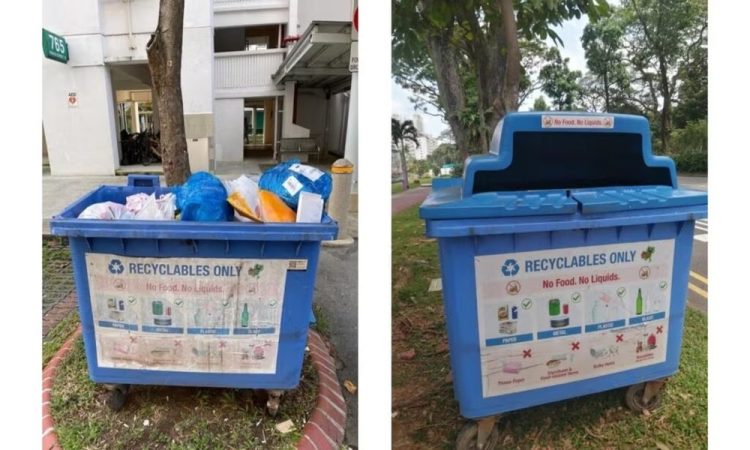
Training staff on what counts as contamination, and posting clear visual guides at collection points, is the most effective intervention a business can make to improve its actual recycling rate.
Certifications and Documentation for ESG Reporting
Plastic recycling in Singapore for businesses generates documentation that feeds into environmental, social, and governance reporting. Recycling certificates from accredited contractors provide evidence that a specified weight of plastic waste was collected and processed through recovery channels rather than sent to incineration. Some contractors offer quarterly waste audit reports that break down collection volumes by material type, giving businesses the data they need for scope 3 emissions calculations and corporate sustainability disclosures.
For businesses seeking Green Mark certification from the Building and Construction Authority, or preparing CDP disclosures for investors, verified recycling data is a required element of the submission.
Selecting a Business Plastic Recycling Partner
Evaluating a plastic recycling Singapore contractor for commercial or industrial use involves checking their NEA licensing status, the resin types they are equipped to process, their contamination tolerance thresholds, their collection frequency options, and their documentation and reporting capability. A licensed contractor who provides certificates, collection manifests, and period reports gives the business the paper trail that regulatory compliance and ESG reporting require.
Plastic recycling Singapore businesses and industries depend on starts not with sorting bins but with choosing a contractor who can actually close the recovery loop.